The Department of Mathematics, NSUT, New Delhi, invites researchers, academicians, scientists, and professionals from across the globe to submit original research papers for RAM&A-2026. The conference aims to provide an international platform for discussing recent advances in both pure and applied mathematics, with special emphasis on their applications to real-world problems.
RAM&A-2026 seeks to promote intellectual exchange, interdisciplinary collaboration, and academic excellence by bringing together experts from diverse fields of mathematical sciences.
Download the conference brochure here.
Preparing a submission? Download the abstract template: Word (.docx) · LaTeX (.tex).
Netaji Subhas University of Technology (NSUT), New Delhi, is one of India's premier technical universities, renowned for excellence in engineering, applied sciences, and interdisciplinary research. With a strong tradition of academic excellence and innovation, NSUT provides a dynamic environment for learning, research, and industry collaboration. The University is committed to nurturing skilled professionals, researchers, and leaders who contribute to technological advancement and societal development.
Topics of interest for submission include, but are not limited to:
Submit your completed abstract (using the Word or LaTeX template above) via the abstract submission form. For queries, contact rama2026@nsut.ac.in.
Get to know the invited speakers anchoring each session block at RAM&A 2026.
Prof. Anand SrivastavaVice Chancellor, NSUT Delhi
Prof. Sonika BhatnagarDean, Faculty of Sciences, NSUT Delhi
Prof. Vijay GuptaHead, Department of Mathematics, NSUT Delhi
Prof. J.K. Singh
Dr. Mamta Mishra
Dr. Niraj Kumar
Dr. Sumita Dahiya
Dr. Bhawna Gupta
RAM&A 2026 recognises outstanding contributions from early-career and student researchers.
Awarded to the strongest oral presentation in each track, judged by a panel of experts on originality, rigour, and clarity of exposition.
Recognises exceptional poster presentations from early-career researchers, selected for scientific merit, clarity, and relevance to the conference themes.
Award criteria and prize amounts will be confirmed closer to the conference dates.
Three days of keynotes, parallel sessions, and a poster evening.
The detailed schedule is being finalised and will be announced closer to the conference dates.
Fees are categorised by delegate type and presentation format.
The fees listed below are Early-Bird rates, valid through November 30, 2026. Register before this date to lock in these rates — fees are subject to increase afterward.
| Category | Paper / Oral Presentation | Poster Presentation |
|---|---|---|
| Faculty / Industry / Postdoc | ₹4,000 | ₹3,000 |
| PhD Scholars | ₹3,000 | ₹2,000 |
| Students (UG/PG) | ₹2,000 | ₹1,000 |
| Attendee (non-presenting) | ₹2,000 — flat, all categories | |
| Category | Paper / Oral Presentation | Poster Presentation |
|---|---|---|
| Faculty / Industry / Postdoc | US $150 | US $150 |
| PhD Scholars | US $100 | US $100 |
| Attendee (non-presenting) | US $80 — flat, all categories | |
Fees include all sessions, conference materials, lunches, and the conference banquet. Students must present a valid ID at check-in.
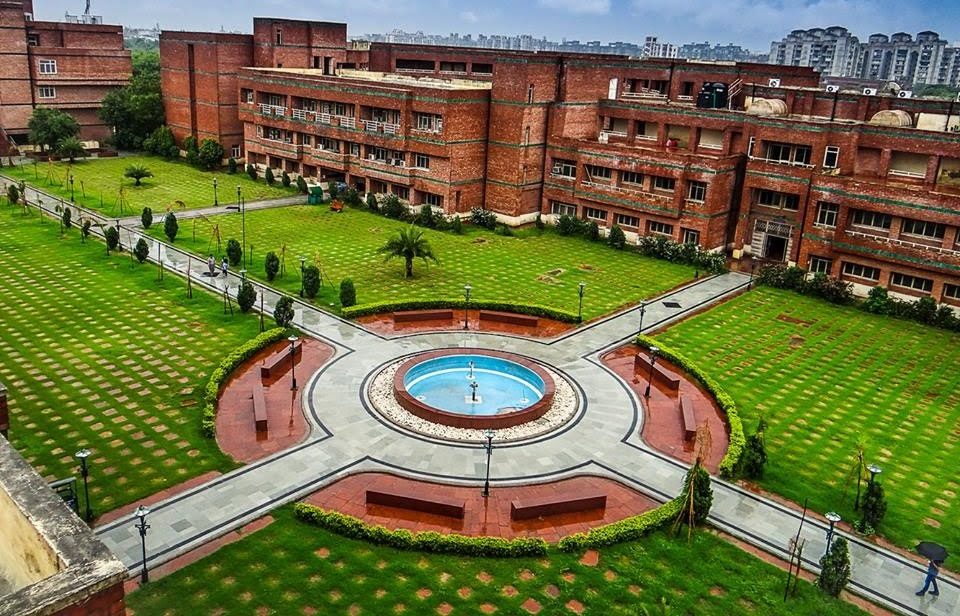
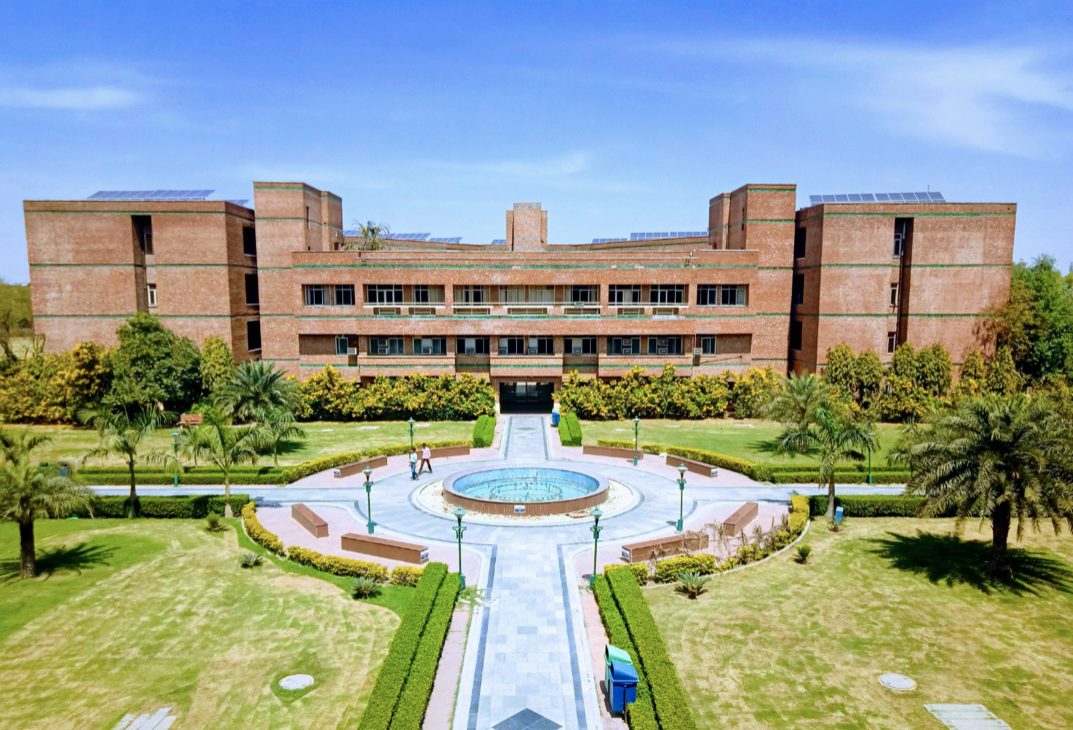
Held on campus at the Department of Mathematics.
Coming in from outside Delhi? A few places worth carving out time for. Tap any card for more detail.
Formally the Sri Sri Rukmini Dwarkadhish Temple, this ISKCON centre opened in 2013 and is markedly quieter than the flagship ISKCON temple in East of Kailash — a good option if you'd rather avoid a crowd. The complex is wheelchair accessible and includes a small prasadam counter.
The 73-metre minaret was begun in 1192 and is the tallest brick minaret in the world. Beyond the tower itself, the surrounding complex rewards a slow walk — look out for the Alai Darwaza gateway, the unfinished Alai Minar, and the Quwwat-ul-Islam Mosque. Weekday mornings are noticeably quieter than weekends.
Designed by Edwin Lutyens and completed in 1931, India Gate commemorates soldiers of the British Indian Army. It anchors one end of Kartavya Path, a wide ceremonial boulevard that's popular for evening walks, ice cream vendors, and boat rides on the adjoining canal basin.
Commissioned in 1570 by Empress Bega Begum for her husband Emperor Humayun, this was the first grand dynastic mausoleum of the Mughal era and introduced the charbagh (four-part garden) layout to India. The grounds are spacious and considerably less crowded than the Taj Mahal it went on to inspire.
Completed in 1986, the temple is built from 27 free-standing marble "petals" and has no religious imagery inside — it's open to people of every faith for quiet reflection. Shoes are checked in at the entrance, and the grounds include several reflecting pools.
Opened in 2005, the complex covers over 100 acres and showcases traditional Hindu temple architecture and craftsmanship in stone. Security is strict — visitors must leave bags, cameras, and phones at a cloakroom outside — but the evening fountain show is worth timing your visit around.
Founded in the 17th century by Emperor Shah Jahan, Chandni Chowk is a dense maze of lanes — each historically specialised in a trade, from spices to wedding cards to silver jewellery. It's also considered one of India's great street food destinations; come hungry and go on foot, as the lanes are too narrow for most vehicles.
Named after the Lodhi dynasty, the gardens hold several well-preserved monuments — the Bara Gumbad, Sheesh Gumbad, and the tombs of Muhammad Shah and Sikandar Lodi — set among open lawns and mature trees. Nine gates lead in, and it's popular with joggers and yoga groups in the early morning.